A Manager’s Guide to Balanced Productivity”
In today’s multidimensional world, the pursuit of perfect organisation can often lead to an unexpected pitfall: organisational paralysis.
As managers, we strive for efficiency and order, but sometimes this very drive can hinder our progress and stifle our team’s productivity. Let’s explore how to recognize this trap and, more importantly, how to break free from it.
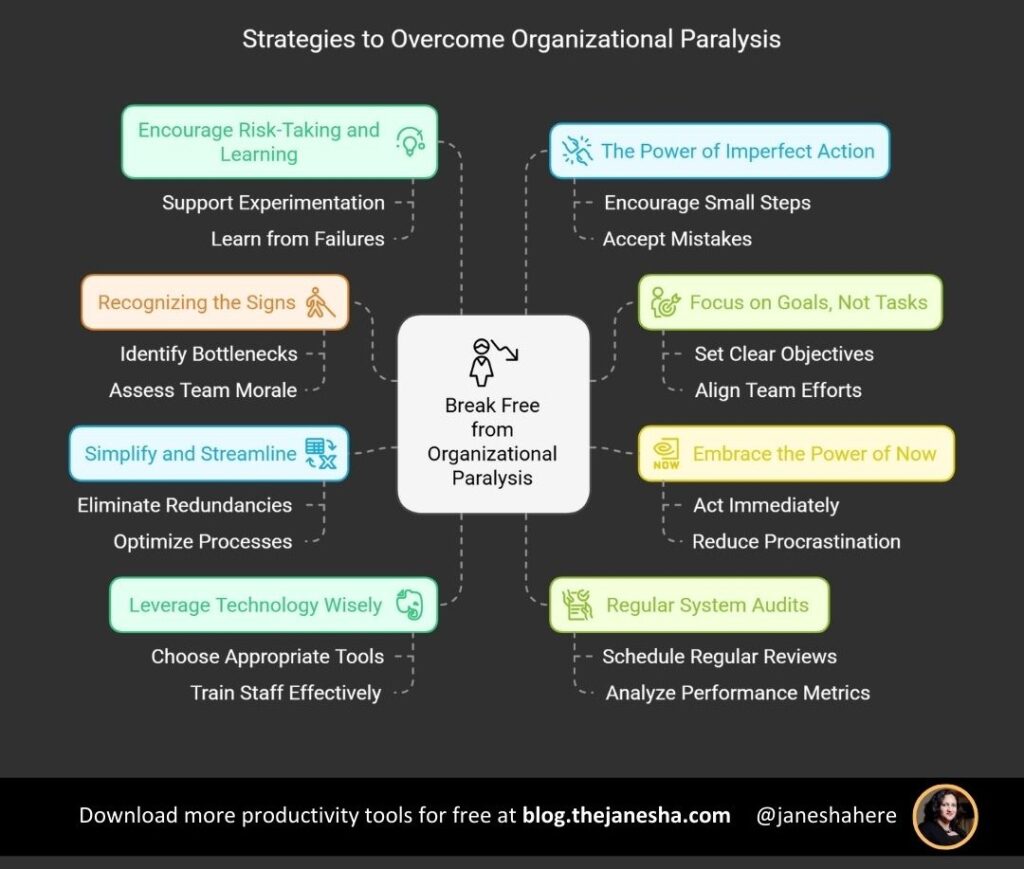
1. Recognizing the Signs
Organisational paralysis often creeps in silently. You might notice:
- Endless refinement of to-do lists without actual task completion
- Team meetings that focus more on planning than doing
- A culture of waiting for “perfect” conditions before taking action
- Decreased creativity and spontaneity in problem-solving
2. Focus on Goals, Not Tasks
It’s easy to get lost in the minutiae of daily tasks. Regularly reconnect with the bigger picture by asking:
“How does this align with our goals?”
This question helps prioritise actions that truly matter and prevents getting bogged down in less impactful activities.
3. Embrace the Power of Now
Procrastination often masquerades as “thorough planning.” Combat this by considering:
“What’s the cost of delay?”
Understanding the real impact of postponing action can be a powerful motivator to move forward.
4. Simplify and Streamline
Overcomplicated systems are often at the root of organisational paralysis. Regularly challenge your processes by asking:
“How can we simplify this?”
Look for redundancies, unnecessary steps, or overly complex approval processes. The goal is to create systems that facilitate work, not hinder it.
5. Leverage Technology Wisely
While technology can be a great ally in organisation, it can also contribute to paralysis if not used judiciously. Consider:
“Can we automate this?”
Automation can free up mental space and time for more critical thinking and action. However, be cautious not to automate for the sake of automation. Always evaluate the real impact on productivity.
6. Regular System Audits
Your organisational systems should serve you, not the other way around. Periodically ask:
“Is our system serving us?”
Be willing to abandon or modify systems that no longer contribute to your team’s efficiency and productivity.
7. Encourage Risk-Taking and Learning
A culture that punishes mistakes will inevitably lead to paralysis. Instead, normalise risk-taking and learning:
“What did we learn from this?”
Celebrate both successes and failures as opportunities for growth. This approach will encourage your team to take action rather than remain stuck in endless planning.
8. The Power of Imperfect Action
One of the most effective ways to combat organisational paralysis is to embrace imperfect action. Ask yourself and your team:
“What’s the next imperfect step we can take?”
This question shifts focus from planning to doing, even if the action isn’t perfectly aligned with your grand vision. Remember, a good plan executed today is better than a perfect plan executed never.
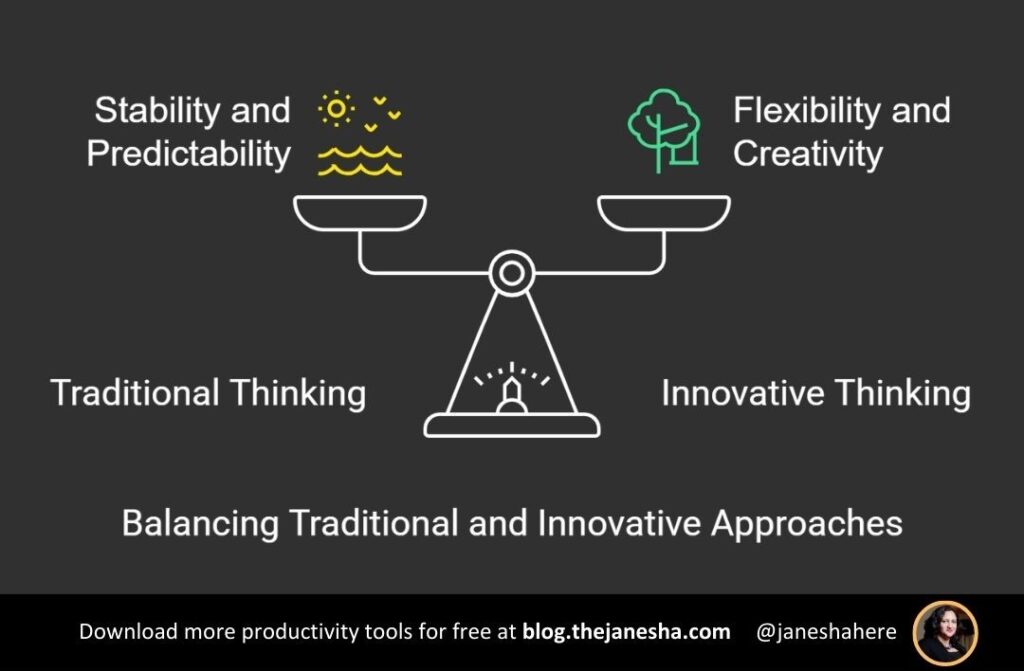
Breaking free from organisational paralysis requires a shift in mindset and approach. It’s about finding the balance between structure and flexibility, planning and action. The goal of an organisation is to facilitate progress, not hinder it. Role of a leader is to create an environment where our teams feel empowered to act, learn, and grow – even if it means sometimes acting before everything is perfectly in place.
What strategies have you found effective in overcoming organisational paralysis in your workplace? Share your experiences in the comments !
If this resonated with you, you’ll love Seamless Flow: Navigating Life with Purpose & Efficiency. It’s packed with practical strategies to help you align your daily actions with your long-term goals.
👉 Download Your Free Excerpt of Seamless Flow here.
👉 Or just buy the book here.